
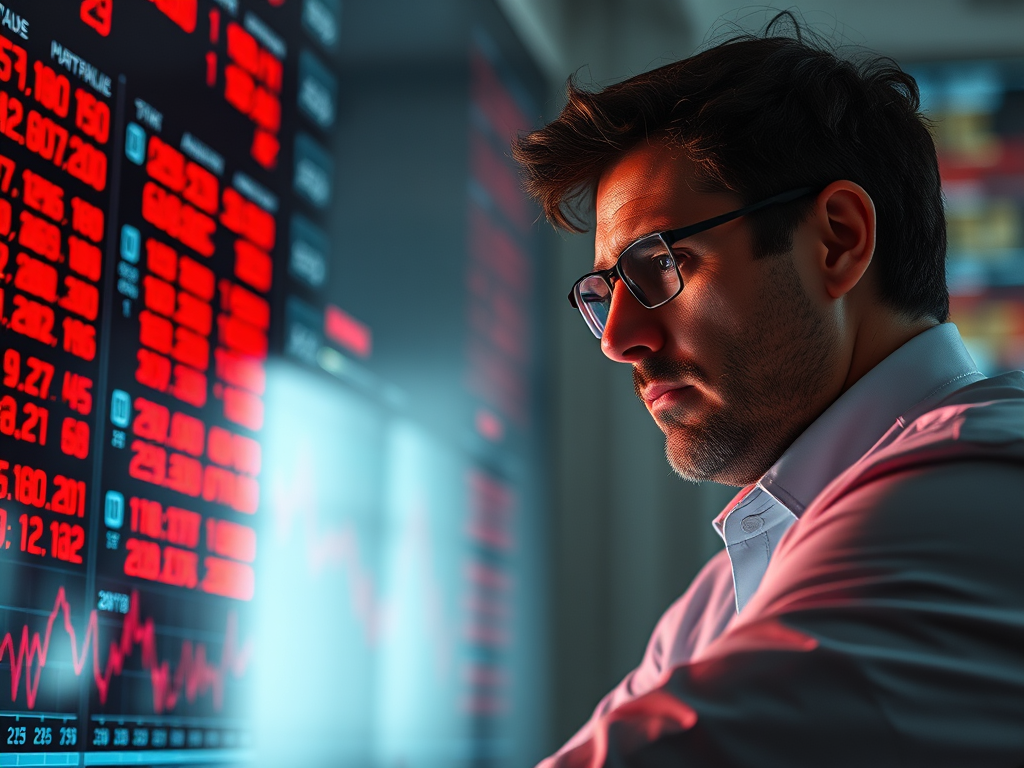
The Same Market, Different Outcomes
March 2020.
Markets are collapsing, and uncertainty is spreading faster than most investors can process it.
Headlines are coming in waves, each one more alarming than the last, and for many, it feels less like investing and more like survival.
David opens his portfolio and pauses for a moment as the screen loads, already knowing what he is about to see.
Red.
Positions are down across the board, some gradually, others sharply, and the longer he looks, the heavier it feels. He refreshes the page, hoping for a different outcome, but nothing changes. After a few seconds of hesitation, he makes a decision.
He sells.
At that same moment, somewhere else behind closed doors, a fund is reviewing the exact same market conditions, looking at the same price movements, and reaching a very different conclusion
They are not reacting to the fear in the headlines or the speed of the decline. Instead, they are following a process that was defined long before this moment ever arrived.
And based on that process, they begin to buy. Not because they feel confident. Not because they can predict what happens next. But because their system tells them to act.
Same market. Same moment. Two completely different behaviors.
And over time, that difference becomes the line that separates those who build wealth from those who struggle to keep it.
The Behavior Gap
In the weeks that follow, David finds himself checking his portfolio more often than he would like to admit, sometimes out of curiosity, but more often out of concern.
Each time he opens the app, he is not just looking at numbers, he is reacting to them, interpreting every movement as a signal, and every drop as something that requires action.
The experience becomes exhausting, not because of the market itself, but because of the constant need to respond to it.
The fund, on the other hand, operates in a completely different rhythm. They are not watching every move or reacting to every headline, because their decisions are not driven by the moment.
Instead, they follow a structured process that tells them when to adjust, how much to allocate, and when to simply do nothing at all.
If their equity exposure falls below a target level, they increase it. If risk rises beyond acceptable limits, they reduce it. If allocations drift over time, they rebalance.
No panic. No second-guessing. Just execution. What separates the two is not access to information. It is the presence or absence of structure.
The Hidden Advantage of David
Months pass, and the market begins to stabilize, slowly at first, then with more confidence as uncertainty starts to fade.
David watches carefully, still hesitant, still carrying the memory of how quickly things fell apart. He tells himself he is waiting for clarity, for confirmation, for the right moment to step back in.
But what he does not fully realize is that he already has something far more valuable than perfect timing. He has flexibility. He is not required to stay invested. He is not judged on quarterly performance. He does not need approval from a committee before making a decision. And he can move quickly when he truly understands an opportunity.
At one point, he comes across a small company that he has followed for some time, one that is still under the radar but showing signs of real potential.
He considers putting a small amount of capital into it, nothing significant, just enough to begin building a position. For a large fund, this opportunity would be irrelevant, too small to meaningfully impact performance.
But for David, it could matter. He hesitates. Not because the opportunity is unclear, but because he is unsure of himself.
And in that hesitation, the moment passes. Years later, that same company grows into something much larger, becoming one of the stronger performers in its space. And while the outcome was never guaranteed, the opportunity was real. Freedom was never the problem. The lack of conviction was.
Where David Goes Wrong
By the end of the year, the market has recovered far more than most expected, moving steadily upward while confidence begins to return.
David watches from the sidelines, trying to make sense of it, wondering if the recovery is real or just temporary. As prices continue to rise, hesitation slowly turns into regret.
Eventually, the feeling becomes too strong to ignore. He decides to re-enter the market. But now, the prices are higher. The uncertainty feels different. And the decision, once again, is driven more by emotion than by process.
This pattern is not unique to David. It is one of the most common cycles in investing:
Selling when fear is highest. Waiting while recovery begins. Re-entering when confidence returns. Not because investors lack intelligence. But because they lack a system that guides their behavior when emotions take over.
The Solo Investor Shift
Over time, David begins to understand that the problem was never the market itself, but the way he was interacting with it. So instead of trying to predict what happens next, he starts focusing on building a structure that will guide his decisions regardless of what the market does. He creates an Investment Policy Statement, not as a formality, but as a way to define his rules before emotions have a chance to interfere.
He limits how often he reviews his portfolio, shifting from constant monitoring to scheduled, intentional check-ins.
He becomes more selective with opportunities, recognizing that saying no is just as important as knowing when to say yes. And he manages his position sizes in a way that ensures no single decision can significantly damage his overall progress.
Slowly, his behavior changes. Not overnight. But consistently. And for the first time, his actions begin to align with his long-term goals.
The Real Game
In the end, the market is not a place where the smartest investor always wins. It is a place where behavior compounds over time, quietly and consistently, shaping outcomes in ways that are often overlooked.
Institutions rely on structure to stay consistent.
Individuals have the ability to adapt and move freely.
But without discipline, that freedom becomes a liability instead of an advantage. The investor who learns to control their behavior, especially in moments of uncertainty, is the one who builds lasting wealth
Not by reacting faster. But by reacting less.
If this article sparked something in you:
- 🔔 Subscribe for weekly wealth-building strategies.
- 📖 Read more articles on finance and investing.
- 🎥 Watch our YouTube channel for practical financial lessons.
–The Solo Investor 2026